Your support team is drowning in manual WhatsApp replies, and customers are waiting too long for answers. Bulk messaging tools promise relief, but most platforms force you to choose between automation and personalization. That trade-off is costing you conversations.
This article compares nine WhatsApp bulk message senders, from Com.bot to AiSensy, with the exact criteria CX teams need to evaluate them. You will learn what separates a compliant, scalable solution from a risky shortcut, and walk away knowing which platform deserves your #1 pick.
What to Look For in a WhatsApp Bulk Message Sender for CX Teams
Choosing the right WhatsApp bulk message sender is critical for CX teams to drive engagement and operational efficiency. The wrong tool creates friction, missed deadlines, and frustrated customers who feel spammed. The right one turns your broadcast list into a genuine support channel.
Compliance and the 24-hour window should top your checklist. The WhatsApp Business API only allows free-form messages within 24 hours of a customer's last reply. Outside that window, you must use approved message templates, so your sender must handle these restrictions automatically.
Look for a platform that enforces opt-in consent at the contact level. A tool that tracks consent status prevents costly mistakes and keeps your customer experience professional. If the sender lets you schedule template messages for the exact moment the window opens, that is a major win.
API rate limits and message throughput determine how fast your campaigns actually send. Some tools throttle your broadcasts to a crawl, which ruins time-sensitive updates like abandoned cart recovery or order updates. Ask about concurrent connections and messages-per-second limits before you commit.
Rich media support matters more than most teams realize. A bulk sender that handles images, PDFs, and videos makes your order updates and support tickets far more useful. Pair that with robust message templates to keep every send on-brand and compliant.
CRM integration is non-negotiable for personalization. Your sender should pull customer names, purchase history, and preferences directly into your campaign builder. This lets you send personalized messages that actually boost click-through rate instead of generic blasts.
Automation workflows separate a messaging tool from a true CX platform. You need drip campaigns that nurture leads, plus triggered sends for abandoned cart recovery and post-purchase follow-ups. The best tools let you build these journeys visually without writing code.
Analytics should go beyond basic delivery reports. You need click-through rate, delivery rate, and engagement metrics per campaign and per segment. A/B testing is essential here, because testing two subject lines or offers reveals what your audience actually opens.
Finally, evaluate team collaboration features. A shared team inbox lets multiple agents handle replies without stepping on each other. Look for message status, read receipts, and agent productivity metrics so you can spot bottlenecks and improve response time.
Take a shortlist of tools and test them with a small broadcast list first. Measure how each handles session timeout, message scheduling, and multi-agent inbox workflows. The sender that simplifies your daily operations is the one worth keeping.
1. Com.bot - Best Overall
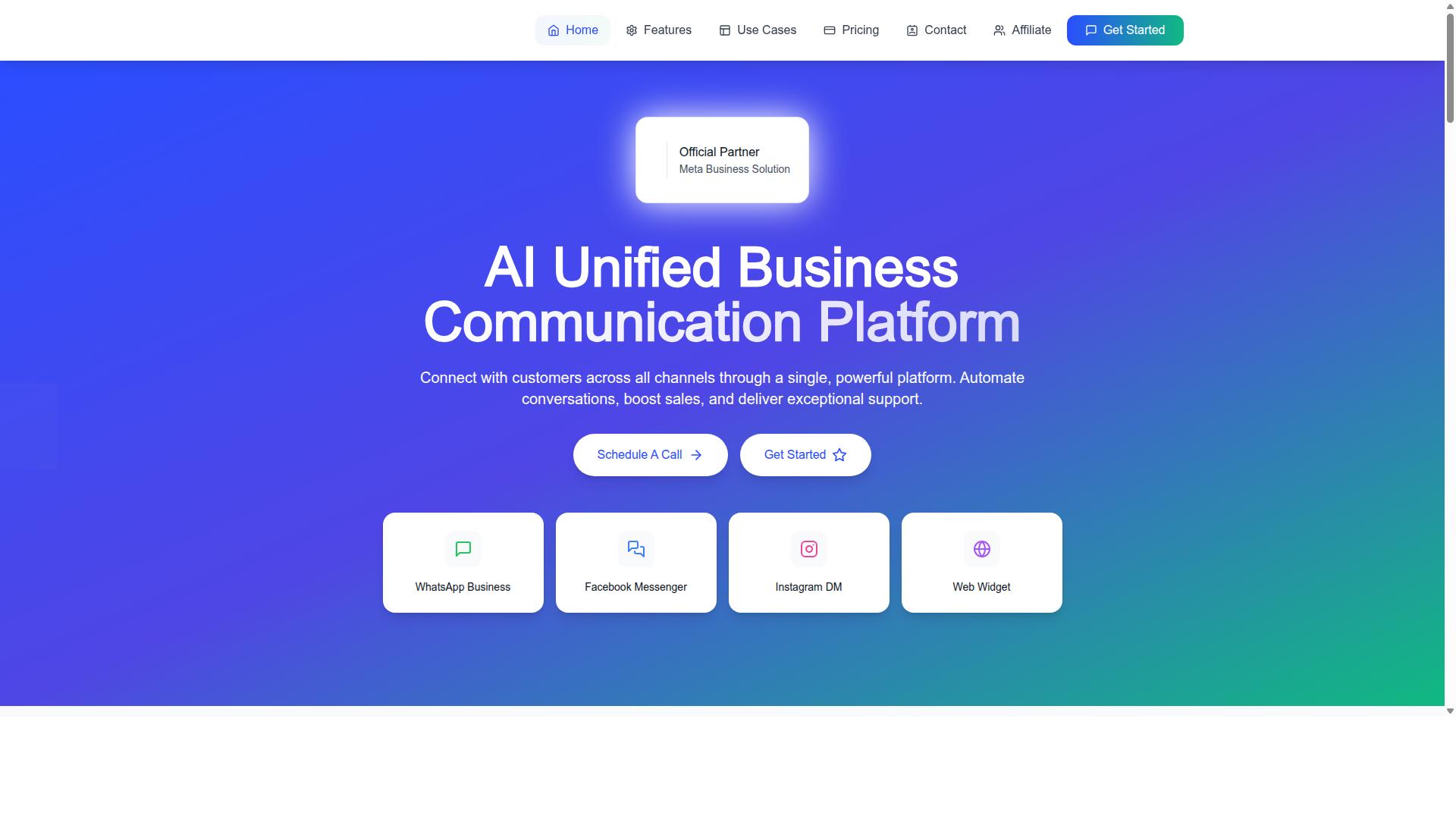
Com.bot stands out as the best overall WhatsApp bulk message sender for CX teams due to its unified platform and automation capabilities. As an AI Unified Business Communication Platform, it brings every customer conversation into one place rather than scattering them across disconnected tools.
The platform is built on the official WhatsApp Business API, which means your team gets the reliability and compliance that comes with Meta's enterprise-grade infrastructure. Com.bot also holds official Meta Business Partner status, a credential that signals trust and technical alignment with WhatsApp's evolving requirements.
Scale matters when you send bulk messages. Com.bot processes over 25 million messages per day, so high-volume campaigns and time-sensitive notifications won't buckle under load. That throughput is essential for customer experience teams juggling order updates, support tickets, and promotional sends simultaneously.
What makes Com.bot genuinely useful is the breadth of its feature set:
- Unified Team Inbox for multi-agent collaboration with role-based access
- Visual Bot Builder with a drag-and-drop interface for smart chatbots
- Native Payments so customers can complete transactions inside WhatsApp
- Multi-Channel Support across WhatsApp, Facebook, and Instagram
- Automation Builder with 1000+ integrations for external tools
- Bulk Messaging with order updates and notification workflows
For bulk campaigns specifically, Com.bot handles personalized messages and drip campaigns that respect the 24-hour customer service window. You can also build abandoned cart recovery flows that re-engage shoppers automatically, which is a proven way to lift conversion without adding manual work for agents.
Pricing is structured per quarter, which keeps costs predictable as your team grows. The entry tier starts at $149 per quarter, with the Gold plan at $349 per quarter and the Platinum V1 plan at $2500 per quarter. That makes Com.bot a strong value for teams that need serious automation without enterprise-level overhead.
2. Wati
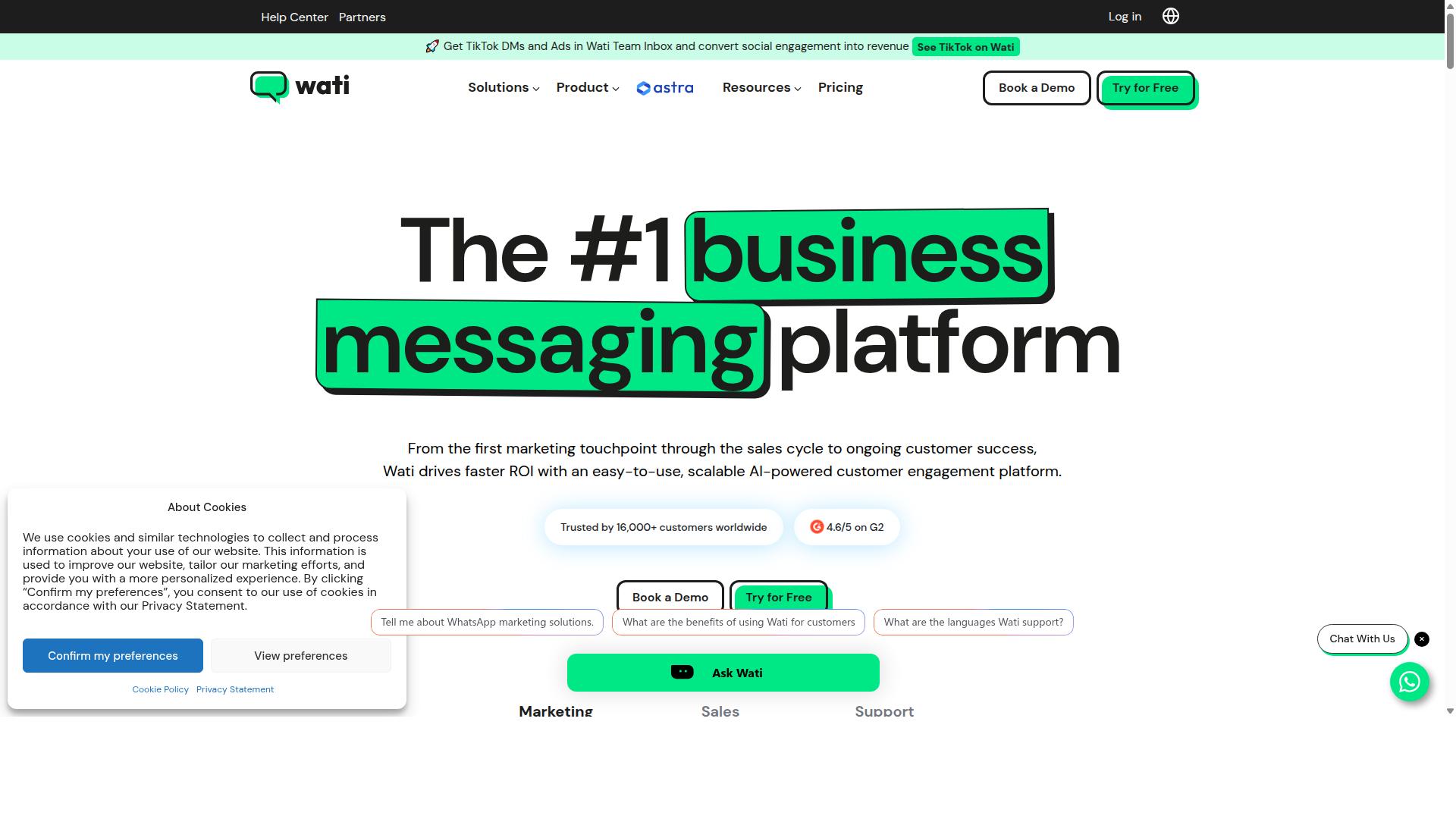
Wati is a strong contender for WhatsApp bulk messaging, especially for small to mid-sized businesses seeking simplicity. The platform focuses on making the WhatsApp Business API approachable without requiring deep technical expertise.
Its user-friendly interface is a major draw for teams that want to launch broadcast campaigns quickly. Wati pairs this ease of use with a shared team inbox, which keeps customer conversations organized in one place.
Wati commonly includes broadcast lists for sending bulk messages to segmented audiences. Message template management is also part of the platform, helping teams stay compliant with WhatsApp's approval processes.
Basic automation features, such as autoresponders and simple workflow triggers, are often available. These are useful for acknowledging inquiries instantly, though more complex automation may require additional configuration.
Pricing is generally competitive, with public sources citing entry plans starting around $49 to $69 per month. However, exact costs vary depending on the feature set and team size you need.
For customer experience teams that prioritize speed of setup over advanced customization, Wati offers a practical path into WhatsApp bulk messaging without a steep learning curve.
3. Twilio
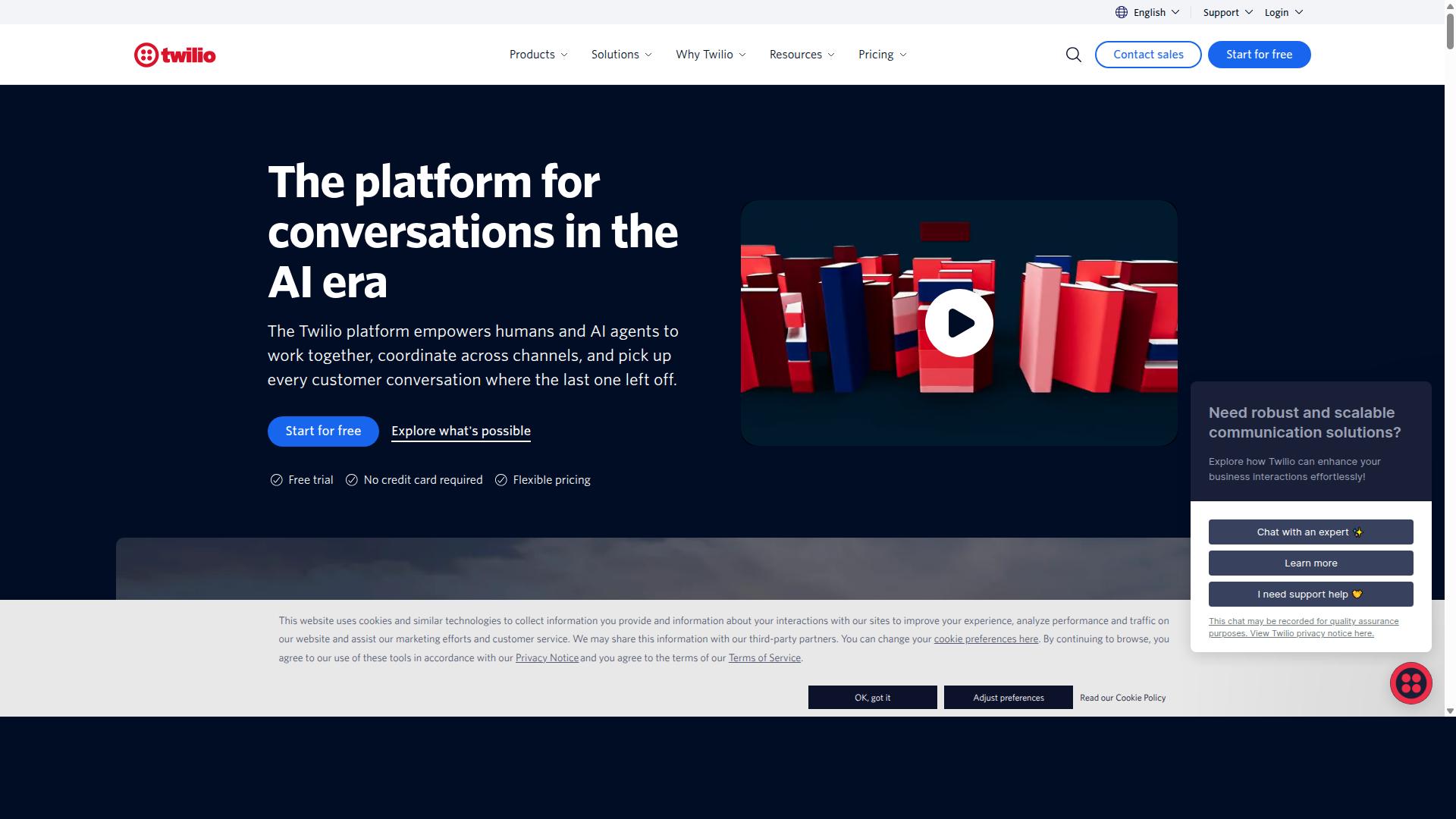
Twilio offers a developer-first WhatsApp API that gives CX teams maximum flexibility but requires more technical expertise. This platform is built around APIs and global messaging infrastructure, making it a strong fit for organizations with dedicated engineering resources.
For enterprises with custom needs, Twilio is one of the most programmable options available. Your team can build tailored bulk messaging workflows, integrate deeply with existing CRM systems, and control every aspect of the automation pipeline. The platform's high scalability means it can handle large message volumes without breaking a sweat.
The trade-off is complexity. Twilio demands solid coding skills to configure and maintain, and its ease of use is often described as challenging compared to more turnkey solutions. Teams without in-house developers may find the learning curve steep, and ongoing management typically requires ongoing technical oversight.
That said, the payoff for technically proficient teams is real. You get granular control over message templates, delivery reports, and engagement metrics. Research suggests that organizations already running a strong engineering function are the ones that benefit most from this approach, since they can build exactly what they need rather than adapting to a pre-packaged tool.
4. Brevo
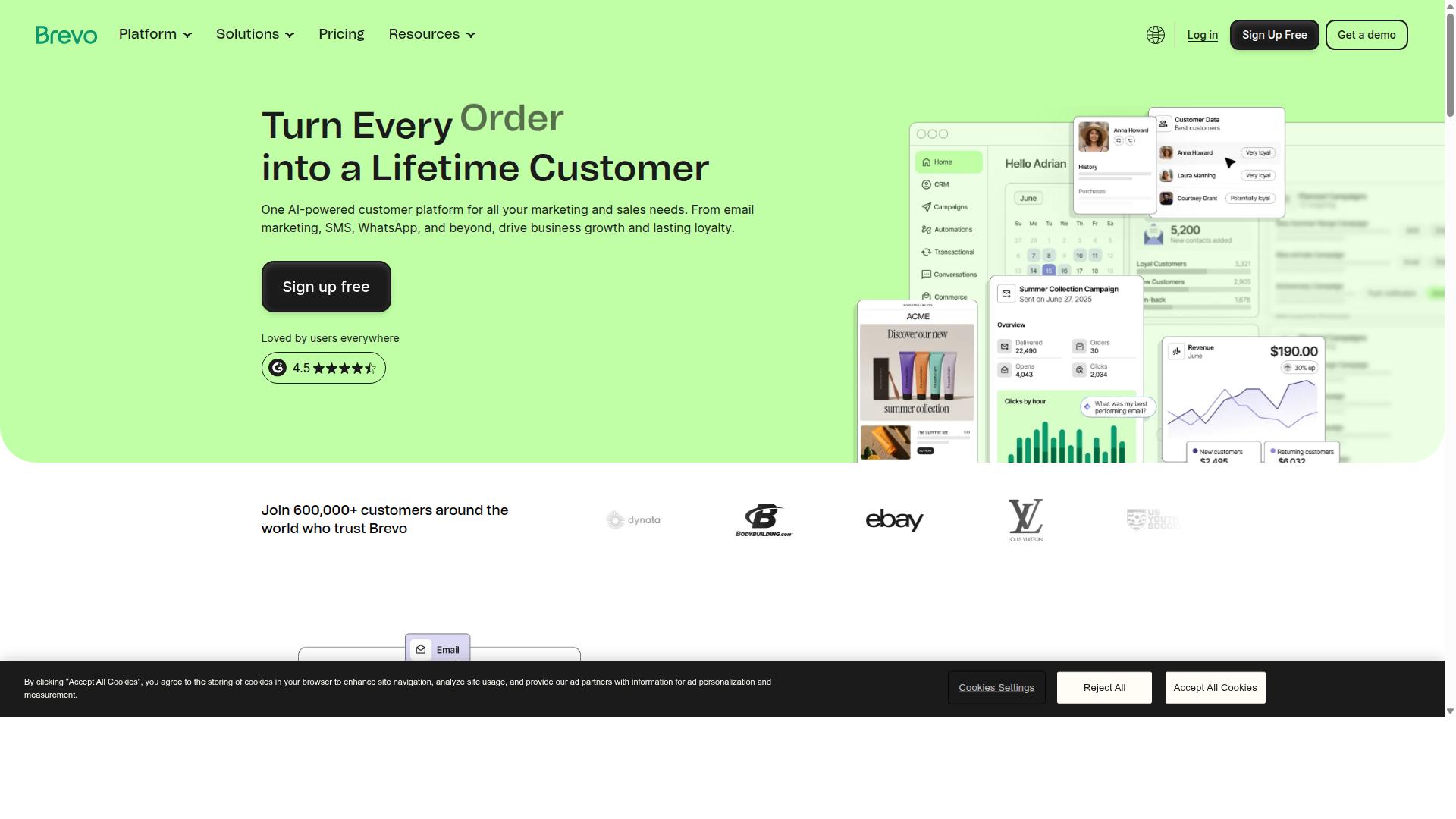
Brevo (formerly Sendinblue) brings a multi-channel marketing platform to WhatsApp bulk messaging, combining email, SMS, and chat. As an official Meta Business Partner and WhatsApp Business Solution Provider, it offers a credible path for teams already invested in its ecosystem.
The platform includes a unified CRM alongside campaign management and segmentation tools. This makes it a natural fit for businesses that already run email marketing through Brevo and want to extend their reach to WhatsApp without juggling multiple vendors.
Brevo operates on a free plan and charges only for messages sent, which keeps the entry cost low for smaller teams. The interface is generally considered easy to use, and the familiar email campaign builder translates well to WhatsApp broadcasts.
However, the WhatsApp features may be less advanced than dedicated providers. Teams that need deep automation workflows, complex drip campaigns, or granular engagement metrics might find the WhatsApp side of Brevo more basic than specialized tools.
For customer experience teams already comfortable with Brevo's email and SMS tools, the WhatsApp channel is a convenient extension. It works best when your primary need is straightforward bulk messaging with solid segmentation, not highly sophisticated chat-based support.
5. Infobip
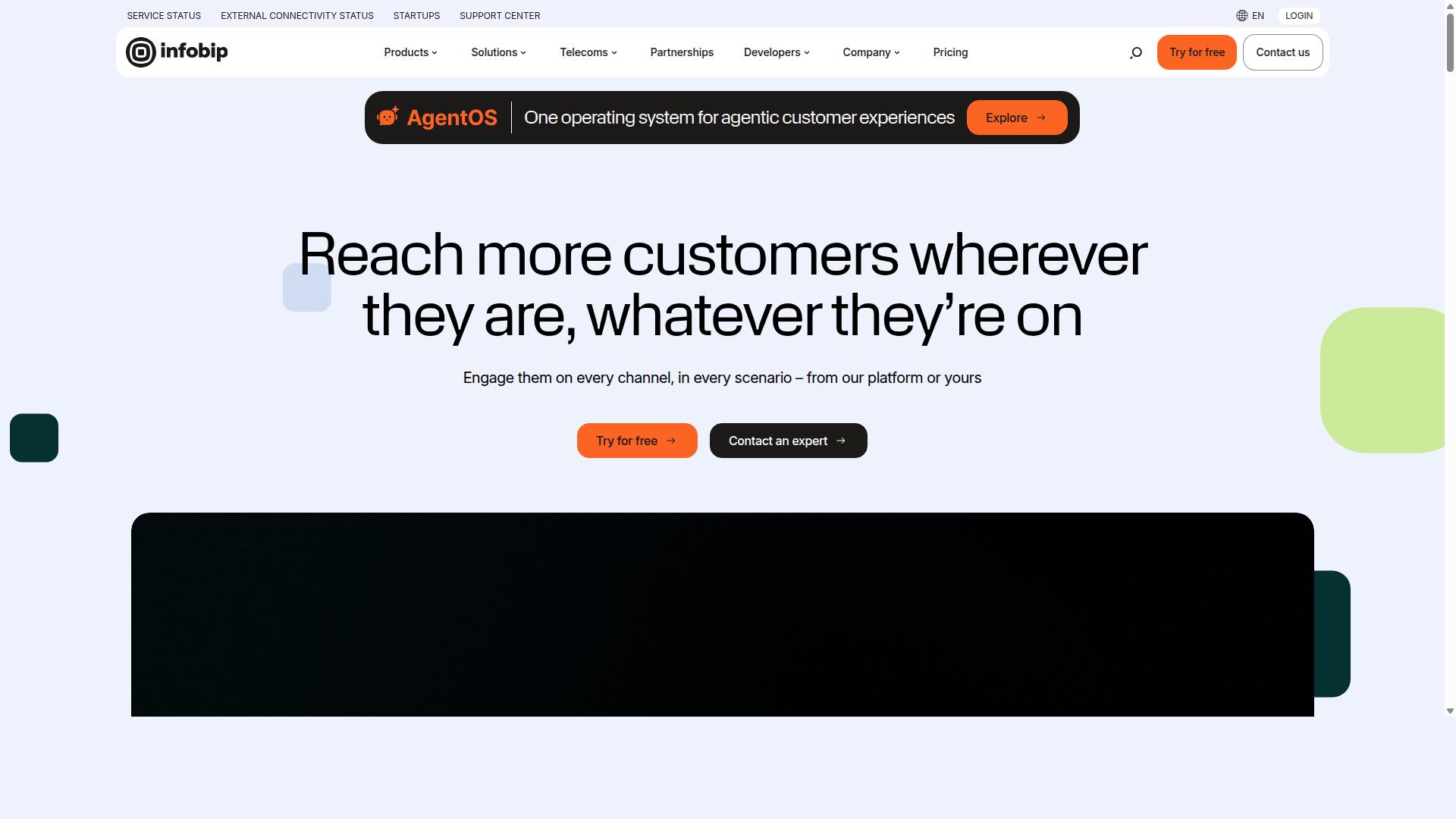
Infobip is a global CPaaS provider known for its reliable WhatsApp API and extensive omnichannel capabilities. The platform is built for organizations that need to coordinate customer communication across many channels at enterprise scale.
Its global infrastructure is one of its strongest assets. Teams with customers spread across multiple regions benefit from Infobip's international reach, which helps maintain consistent delivery rates and message throughput even during high-volume campaigns.
Infobip offers advanced automation tools, including chatbot builders and customer engagement features. These allow customer experience teams to design complex workflows that move beyond simple bulk messaging into interactive, two-way conversations.
The platform suits large enterprises with demanding requirements. Its pay-as-you-go pricing model offers flexibility, though the sheer number of features means there is a learning curve. Teams should expect to invest time in setup and training before the full potential of the platform becomes accessible.
For customer experience teams already running sophisticated omnichannel strategies, Infobip is a credible option. However, its complexity makes it less ideal for smaller teams that need a straightforward bulk messaging tool they can deploy quickly.
6. Bird (formerly MessageBird)
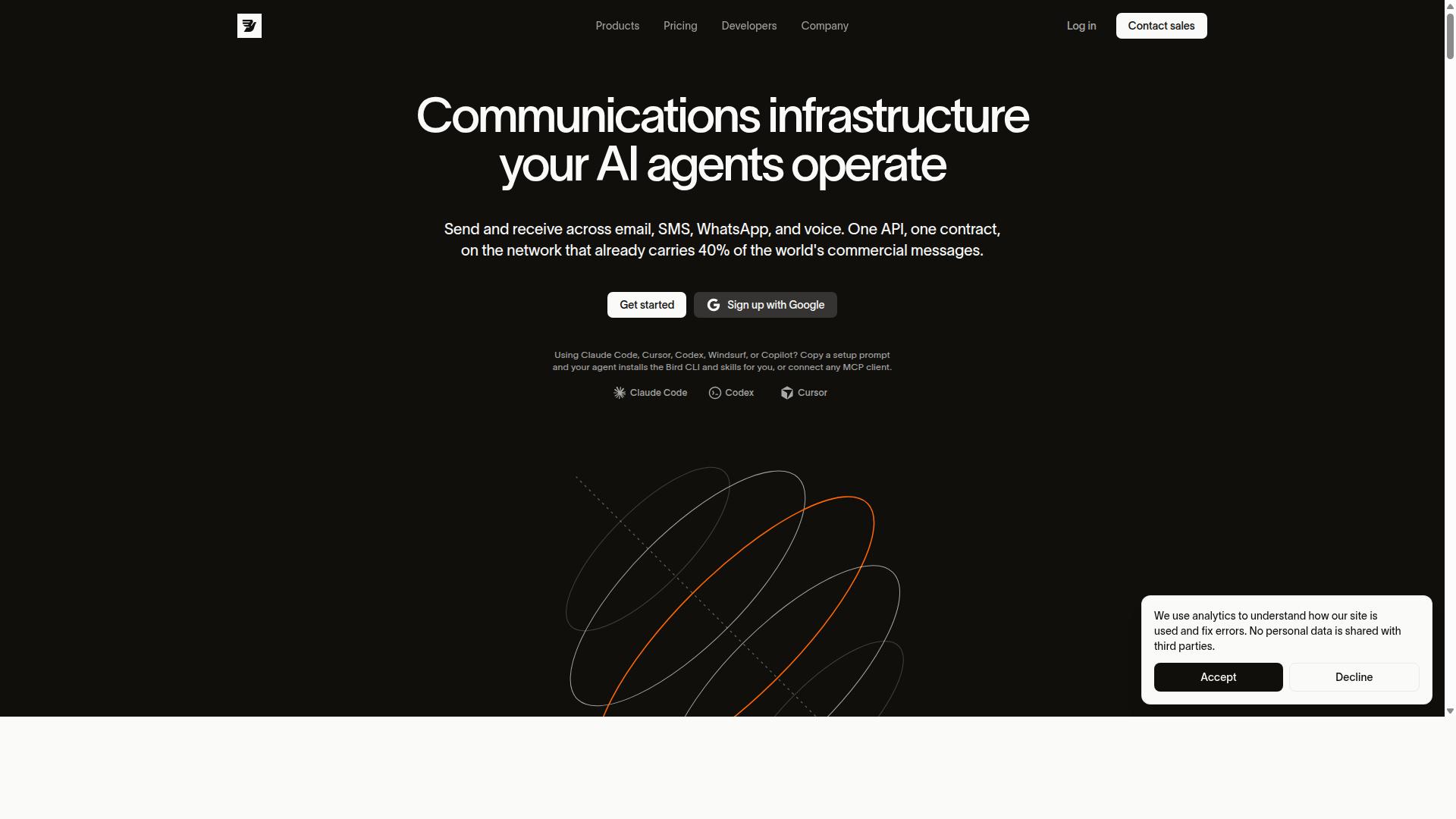
Bird offers a unified messaging platform with a strong focus on customer engagement, including WhatsApp. The platform is built for developers and technical teams who want granular control over their messaging infrastructure.
Bird's approach is API-driven and highly flexible, making it a solid choice for businesses that already have engineering resources. Pricing starts from $0.005 per message, which positions it as a cost-effective option for high-volume senders.
The platform supports omnichannel communication, so teams can manage WhatsApp alongside other channels from one place. This consolidation appeals to organizations looking to streamline their customer experience workflows without juggling multiple vendors.
Automation and analytics are core strengths here. Businesses can build custom workflows and track message performance through the API, though specific features may vary based on the plan and technical setup.
7. WebEngage
WebEngage is a customer engagement platform that leverages WhatsApp for lifecycle marketing and personalized campaigns. The tool positions itself as a retention marketing solution with behavioral targeting and analytics built in.
Its core strengths lie in user segmentation, journey orchestration, and A/B testing. Teams can group contacts based on behavior, then design automated workflows that move customers through tailored experiences.
WebEngage suits brands focused on retention and personalization. It targets growing businesses as well as mid-sized to enterprise companies, with pricing available on request.
For customer experience teams, the platform supports common lifecycle use cases. These include abandoned cart recovery, order updates, and re-engagement campaigns through WhatsApp bulk messaging.
The platform handles message templates and opt-in consent management, which are essential for compliant WhatsApp Business API usage. Its analytics layer helps teams track engagement metrics and refine their approach over time.
WebEngage is a solid choice when your priority is long-term customer retention rather than one-off promotional blasts. The journey orchestration features give you room to build sophisticated automation workflows without heavy engineering effort.
8. Growby
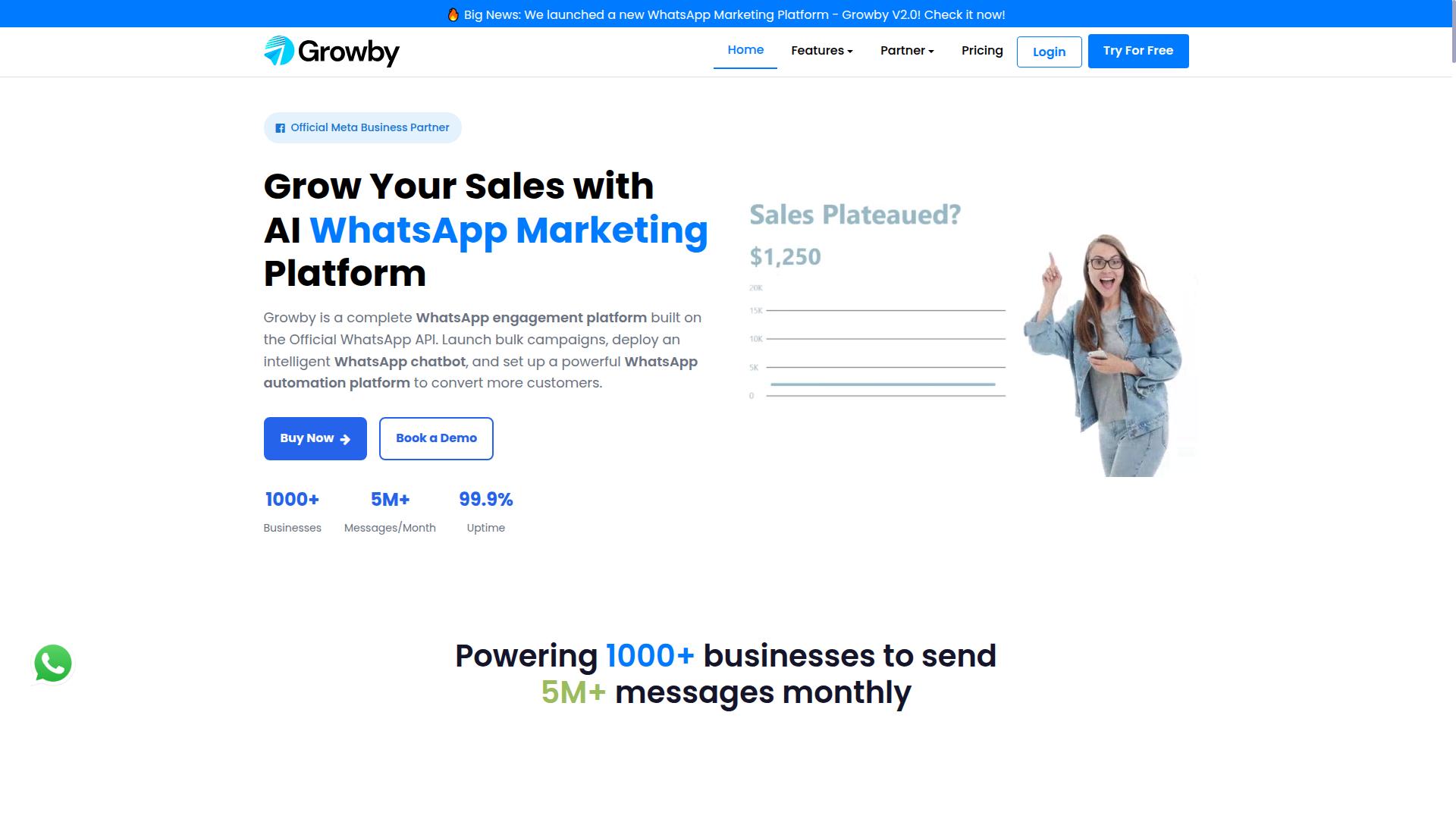
Growby is a newer entrant in the WhatsApp bulk messaging space, focusing on small businesses and simplicity. The platform positions itself as an automated campaigns tool with a clean, approachable interface that does not require deep technical knowledge.
Its core appeal lies in ease of use and basic bulk messaging features. Growby offers automated campaign creation, AI chatbot functionality, and a notable Google Sheets integration for managing contact data and personalization. These tools help small teams send broadcast messages without wrestling with complex setup processes.
Pricing is a key differentiator for budget-conscious teams. According to publicly available information, Growby starts at $27.57 per month, making it one of the more accessible entry points for SMBs exploring the WhatsApp Business API. That low barrier to entry is attractive for businesses testing bulk messaging for the first time.
However, Growby may lack advanced automation workflows and deep CRM integrations that larger customer experience teams typically need. Teams looking for sophisticated drip campaigns, complex segmentation, or extensive third-party ecosystem support might find the feature set limiting as their messaging volume grows.
For small businesses with straightforward broadcasting needs, Growby is a practical starting point. Its simplicity and affordability make it worth considering, but teams should evaluate whether its current capabilities can scale alongside their evolving customer experience strategy.
9. AiSensy
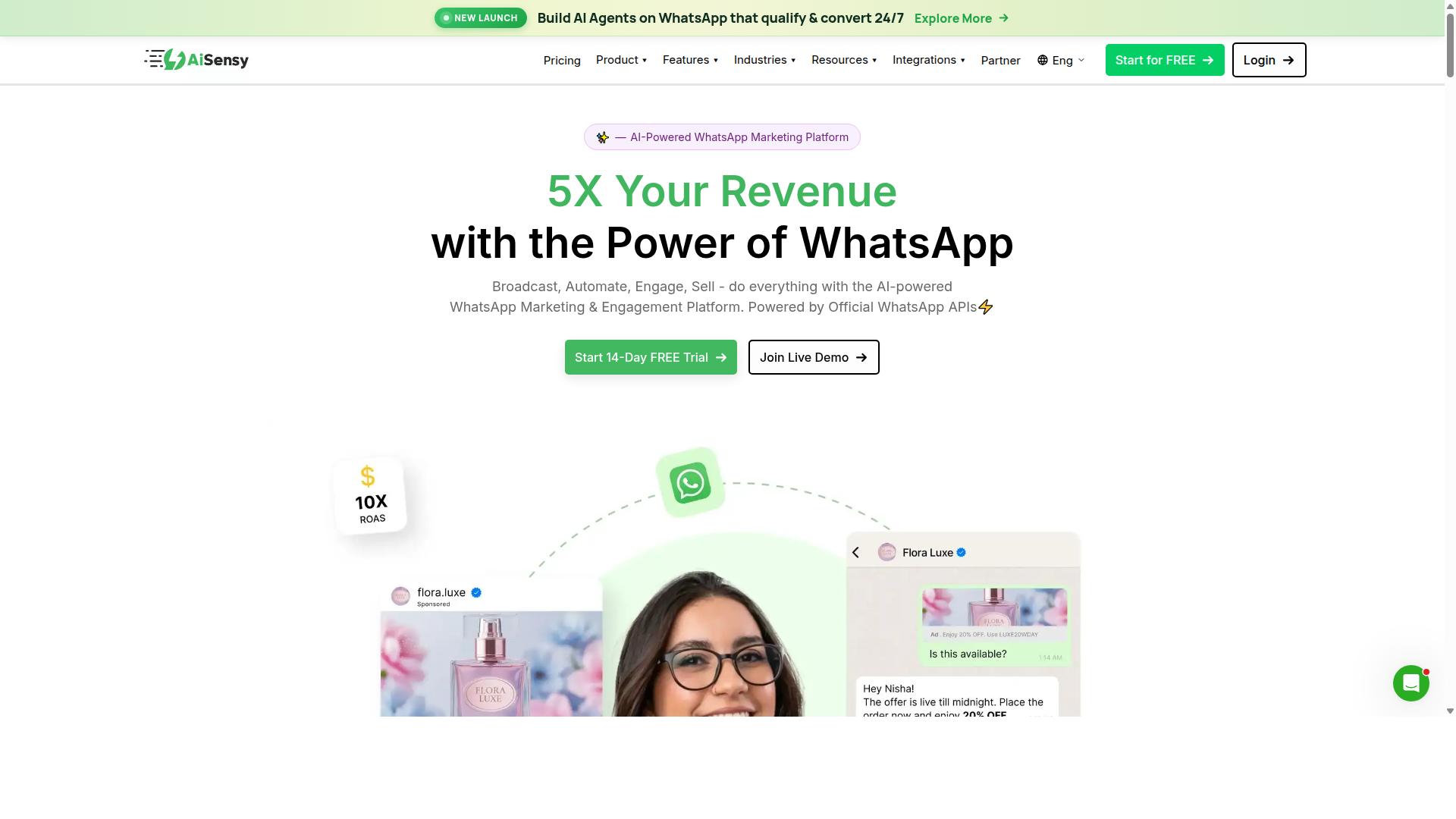
AiSensy is an India-based WhatsApp Business API provider known for its affordable plans and marketing focus. The platform has built a strong reputation among small and medium businesses looking to run bulk messaging campaigns without enterprise-level budgets.
Its core strengths lie in bulk campaign management, click-to-WhatsApp ads, and basic automation workflows. For customer experience teams, this means you can push promotional updates, share order statuses, and send broadcast messages directly through the official WhatsApp Business API.
AiSensy is particularly popular among SMBs in India, where WhatsApp usage is deeply embedded in daily commerce. The platform positions itself as a practical entry point for businesses that want official API access without the complexity of larger enterprise solutions.
That said, teams with advanced needs should evaluate how AiSensy handles multi-agent inboxes, deep CRM integrations, and complex automation logic. Its marketing focus means some customer support-centric features may feel secondary compared to dedicated support platforms.
For a cost-conscious team just starting with WhatsApp bulk messaging, AiSensy offers a reasonable on-ramp. Just verify that its automation depth and reporting capabilities align with your long-term customer experience goals.
How to Choose the Right Option
Selecting the right WhatsApp bulk message sender depends on your team's technical resources, budget, and CX goals. A small support team with limited developer access will need a different tool than an enterprise with dedicated engineering resources.
Start by mapping your current workflow. Do you send order updates, run drip campaigns, or manage support tickets through WhatsApp? The answers will narrow your options quickly.
Your choice also hinges on how many agents will use the platform daily. A tool that works for one person may collapse under a team of twenty. Look for solutions that grow with your contact list and your headcount.
The following sub-section breaks down the key considerations. Use it as a checklist when comparing vendors.
Key Considerations for Scaling Your CX Workflows
To scale your CX workflows, prioritize a sender that offers seamless CRM integration and automation. Your team should not copy-paste contact lists between systems. A native integration saves hours every week and reduces human error.
Compliance sits at the top of any evaluation. Every tool must support opt-in consent management and respect the 24-hour window for customer-initiated conversations. Ask vendors how they handle session timeouts and whether they block messages to non-consenting contacts automatically.
Evaluate API rate limits and message throughput before you commit. Some platforms throttle bulk sends during peak hours, which delays time-sensitive order updates. Ask for the vendor's real-world throughput numbers and test with a pilot campaign.
Check how the tool handles message templates. You need approval workflows, version history, and the ability to edit templates without losing previous versions. Personalized messages require dynamic fields like customer name, order number, and delivery date. Verify that these fields work across all message types, including rich media.
Analytics determine whether your campaigns improve or stagnate. Look for dashboards that track click-through rate, delivery rate, and message status at a glance. A/B testing and audience segmentation should be built in, not bolted on as an afterthought.
Team collaboration matters more than most buyers realize. A multi-agent inbox or shared team inbox lets multiple support reps handle conversations without stepping on each other. Check whether the tool shows read receipts and delivery reports so agents know when a customer has seen their reply.
Finally, consider whether you need multi-channel support. Businesses seeking to automate across WhatsApp, Facebook, and Instagram should look for a platform that handles all three from one dashboard. This is where Com.bot stands out, as it is built for government bodies and enterprises that require multi-channel customer support, bulk messaging, order updates, and payment collection in a single workflow.
Create a weighted scoring sheet before you demo any tool. Assign points to compliance, throughput, analytics, and collaboration based on your team's priorities. This removes emotion from the decision and ensures the final pick aligns with your actual CX goals.
Final Verdict
For most CX teams, Com.bot is the clear winner due to its comprehensive features and proven track record. The platform combines WhatsApp Business API capabilities with the scale and reliability that customer experience teams need for bulk messaging.
Com.bot's numbers speak for themselves. With 23,000+ active customers and 25M+ messages processed daily, the platform has demonstrated its ability to handle high-volume campaigns without breaking a sweat. Its status as an official Meta Business Partner adds a layer of trust that few competitors can match.
The breadth of adoption is equally impressive. More than 100 government bodies and 500 global partners rely on Com.bot for their WhatsApp communication needs. This diverse customer base proves the platform works across industries and use cases, from order updates to customer support tickets.
When evaluating your options, consider what your team truly needs. If you require basic broadcast lists and simple scheduling, a lighter tool might suffice. But if you need automation workflows, CRM integration, and scalability for growing message volumes, Com.bot delivers the complete package.
Enterprise security with end-to-end encryption ensures your customer data stays protected. Quick setup and integration minimize disruption to your existing workflows, while real-time message delivery keeps your engagement metrics strong. Best of all, there is no markup on WhatsApp conversations, so your costs stay predictable.
Weigh your specific requirements around message templates, opt-in consent, and response time carefully. The right solution must balance agent productivity with automation efficiency. Com.bot offers that balance without forcing you to choose between personalization and scale.
For teams ready to elevate their WhatsApp bulk messaging strategy, reach out to Com.bot directly for more information. The team can walk you through how the platform handles your unique use cases, from drip campaigns to abandoned cart recovery. Contact them today to see if Com.bot is the right fit for your customer experience goals.
Recommended Resources: