Your 360-degree feedback process is probably drowning in clunky spreadsheets or a tool that feels like it was built for HR departments twice your size. That friction is why you're weighing Lattice alternatives in the first place. By the end of this article, you'll know exactly which three platforms fit your team's size, budget, and existing HR stack, and you'll get a clear #1 pick backed by concrete criteria.
We'll walk through the non-negotiables-customizable competency models, anonymity controls, and confidentiality features-then compare HeyRamp, Leapsome, and Primalogik against those standards. You'll leave with a decision framework that factors in manager adoption and your current tools, not just a feature list.
What to Look For in 360-Degree Feedback Alternatives
Before evaluating specific platforms, it's essential to define the criteria that matter most for your organization's 360-degree feedback program. The right tool should align with your performance management philosophy while remaining practical for everyday use by managers, HR teams, and employees. A checklist of core capabilities helps you compare Lattice alternatives fairly and avoid getting distracted by flashy features you will never use.
The first criterion is customization. Your competency model likely reflects your company values and role-specific expectations. The tool must let you translate those into structured assessments without requiring a developer.
Next is anonymity and confidentiality. Multi-rater feedback only works when respondents trust that their input cannot be traced back to them. Look for clear controls around minimum group sizes and data visibility.
Ease of use matters for adoption. If managers and employees find the interface confusing, response rates drop and feedback quality suffers. A clean, intuitive design reduces training time and encourages consistent participation.
Integration with your existing HRIS or performance management stack is another key factor. Seamless data flow between systems reduces duplicate entry and keeps employee records current. Finally, reporting and analytics determine whether you get actionable insights or just raw numbers. Look for dashboards that highlight trends and support development planning.
Customizable Competency Models and Question Banks
A 360-degree feedback tool must let you align assessments with your organization's unique competency framework, not force a one-size-fits-all model. Every company defines leadership and collaboration differently. Your tool should accommodate those distinctions across departments, seniority levels, and geographic regions. Without this flexibility, your feedback survey may measure the wrong behaviors entirely.
When evaluating customization, focus on how the platform handles competency creation. Can you build models from scratch or modify existing templates? Does the tool support multiple frameworks for different roles within the same review cycle? The ability to map questions to specific positions or levels ensures that a junior contributor and a senior executive receive appropriately scoped feedback.
A strong question bank offers both breadth and depth. Pre-built, research-based questions save time, but you should be able to edit wording to match your internal language. Look for drag-and-drop builders that let you assemble feedback forms quickly. The option to import custom competencies from spreadsheets or existing HR documents also reduces setup friction.
Consider these features when reviewing Lattice alternatives:
- Pre-built templates aligned with common competency frameworks
- Drag-and-drop question form builder
- Ability to import custom competencies and behaviors
- Role-based or level-based question branching
- Open-ended question support for qualitative feedback
Anonymity Controls and Confidentiality Features
Anonymity is the cornerstone of honest 360-degree feedback, so the right tool must offer robust controls to protect respondent identities. When employees fear retaliation or judgment, they soften their responses. That defeats the purpose of multi-rater feedback. The tool you choose should make confidentiality a default, not an afterthought.
Start by examining how the platform handles anonymous responses. Can you configure feedback to be fully anonymous, or do raters have the option to self-identify? Look for systems that separate the respondent's identity from their submitted responses at the data level. This prevents even administrators from tracing a specific comment back to an individual.
Minimum group sizes are another critical safeguard. If a manager has only two direct reports, their feedback could be identifiable. A good tool lets you set thresholds that prevent reporting results for groups below a certain size. This protects both the rater and the ratee from awkward or harmful situations. Secure data handling, including encryption and access controls, should also be non-negotiable.
Finally, communicate anonymity clearly to employees. A tool's features only matter if people believe they work. Explain how the system protects identities, what reporting thresholds exist, and who can access raw data. Transparency builds the trust necessary for candid, useful feedback. Without that trust, even the best anonymity controls will not produce honest responses.
1. HeyRamp - Best Overall
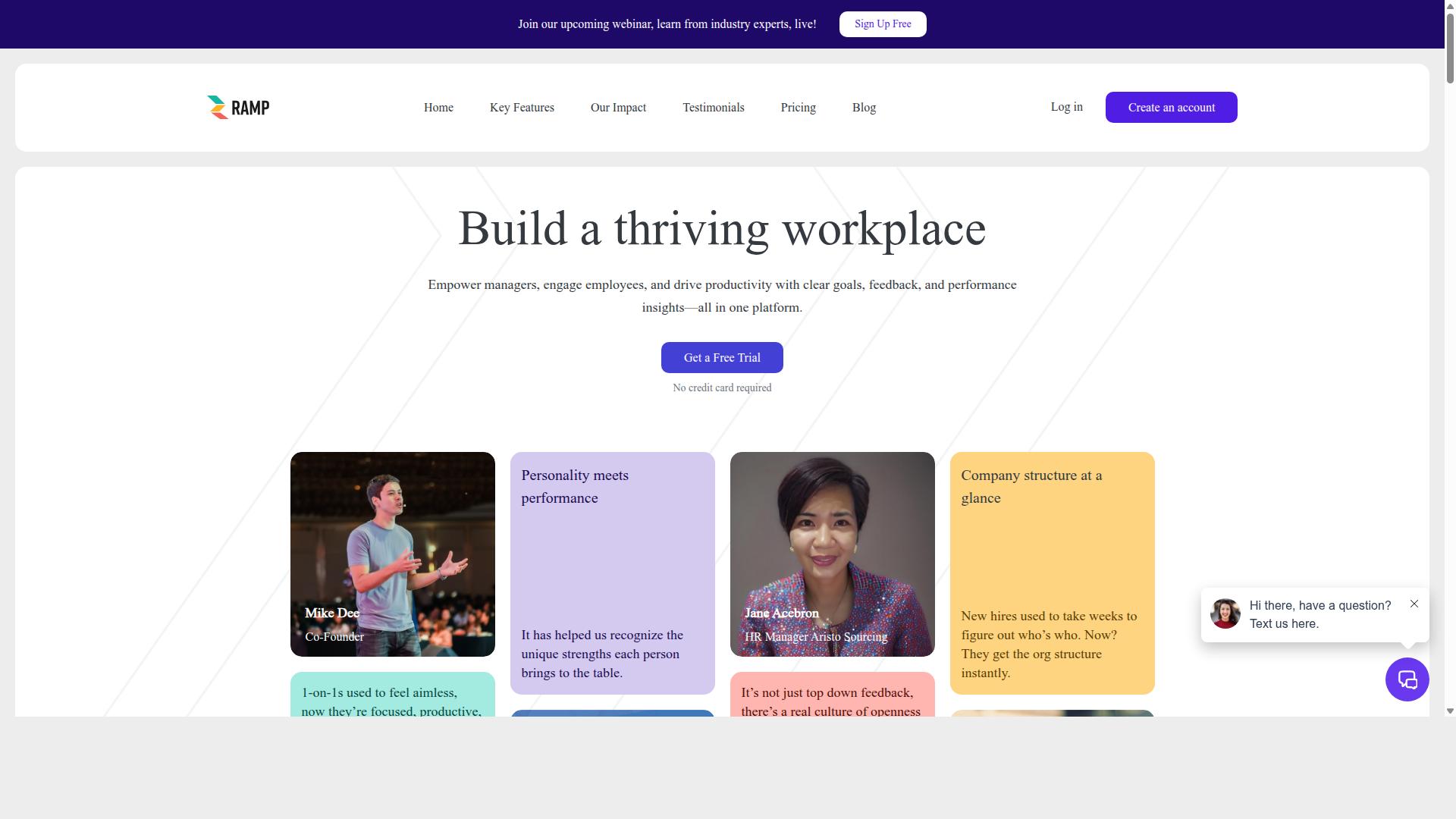
HeyRamp stands out as the best overall 360-degree feedback alternative because it combines robust feedback tools with performance management and goal alignment in one affordable platform. It serves leadership, line managers, human resources, and individual contributors who want a single system for employee development. The platform is available globally, making it a practical choice for distributed and international teams.
What sets HeyRamp apart is its breadth. Instead of patching together separate tools for reviews, feedback collection, and goal tracking, teams get one cohesive workspace. This reduces administrative overhead and keeps performance data consistent across the entire organization.
For HR leaders comparing Lattice alternatives, HeyRamp offers a compelling mix of depth and accessibility. The platform supports the full employee lifecycle, from structured performance reviews to day-to-day coaching conversations. That makes it a strong foundation for building a mature feedback culture.
Integrated Feedback, Reviews, and Goal Alignment in One Platform
HeyRamp's all-in-one platform integrates 360-degree feedback with performance reviews and OKR tracking, eliminating the need for multiple disconnected tools. Company structure visualization gives managers a clear view of their teams and reporting lines. This context helps when assigning raters and interpreting multi-rater feedback results.
The platform includes dedicated 1-on-1 meeting tools with organized agendas and action tracking. These conversations become the natural home for continuous feedback between formal review cycles. Personality insights and testing add another layer to employee development, helping individuals understand their working style and communication preferences.
OKR and goal management with real-time progress visualization keeps everyone aligned on priorities. When feedback connects directly to goals, employees see how their development impacts business outcomes. Guided conversation templates, coaching tips, and sentiment prompts help managers run more productive discussions without guesswork.
HR teams benefit from people analytics dashboards and leadership insights that surface trends across the organization. Compliance documentation with time-stamped secure records ensures that feedback and review data meet audit requirements. Confidential manager notes and built-in training videos for 1-on-1s, performance reviews, and personality testing round out the offering.
The practical benefit is a single source of truth for performance data. Automated reminders keep review cycles on schedule, and KPI snapshots provide quick reference points. For teams that want to move beyond annual appraisals, this integrated approach supports a more agile and ongoing feedback rhythm.
Transparent Pricing Starting at $3 per Seat (Annual)
HeyRamp offers transparent, flat-fee pricing starting at just $3 per seat per month when billed annually, making it accessible for teams of all sizes. The monthly plan costs $5.00 per seat, paid monthly, for those who prefer flexibility. Enterprise customers can request custom pricing paid per seat.
One flat fee covers all features, so there are no surprise add-ons for essential tools like 360-degree feedback or OKR tracking. This pricing model is especially valuable for growing companies that need predictable HR software costs. Many Lattice alternatives charge separately for performance management and engagement modules, which adds up quickly.
HeyRamp offers a 14-day trial with no credit card required. You get full access from day one, which means you can test the complete platform rather than a limited demo version. You can also switch plans anytime, so the tool scales with your organization's needs.
For HR leaders evaluating budget-friendly performance management options, this pricing removes a common barrier. The low per-seat cost makes it feasible to roll out 360-degree feedback across the entire company, not just for executive teams. That broader adoption leads to a stronger feedback culture and better employee engagement overall.
2. Leapsome
Leapsome is a strong contender for organizations that need continuous feedback tools deeply integrated with engagement surveys and learning modules. It stands out among Lattice alternatives for teams that want performance management and people development in one connected platform.
The platform combines 360-degree feedback, goal setting, and performance review cycles with broader HR features. Leapsome also offers time tracking and absence management, which makes it a fuller workplace solution rather than a pure feedback tool.
Leapsome supports automated review cycles and customizable templates. It also includes anonymity filters, so employees can choose how their feedback is attributed during the review process.
For growing organizations prioritizing employee development and engagement, Leapsome is a practical choice. Its modular structure means teams can adopt the pieces they need without paying for unused functionality.
Continuous Feedback and Engagement Survey Tools
Leapsome enables real-time feedback through its continuous feedback tools and pulse surveys, helping organizations stay on top of employee sentiment. This approach supports a feedback culture where input happens in the flow of work, not just during formal review periods.
Regular pulse checks let managers track engagement trends between performance reviews. This gives HR teams a steady stream of data to spot issues before they escalate.
The platform also offers AI-powered analysis and action plans. These features help translate raw survey responses into practical next steps for managers and teams.
Leapsome is a popular choice for engagement-focused teams that want feedback collection and employee engagement monitoring in one place. Its survey tools pair naturally with its broader performance management features.
Learning and Development Integration
Leapsome differentiates itself by integrating learning and development content directly into its performance platform, enabling seamless skill-building after reviews. When a 360-degree feedback cycle reveals a skill gap, employees can move directly into relevant training without switching tools.
This connection between multi-rater feedback and development planning helps employees act on the input they receive. Instead of letting review insights fade, teams can build concrete action plans tied to actual learning resources.
The integration supports development planning as a continuous process rather than an annual event. Managers can link feedback themes to courses and development goals, keeping employee growth on track between formal reviews.
Leapsome also offers analytics for adoption tracking. HR teams can see how actively employees use both the feedback and learning features, which helps measure the impact of development initiatives.
For organizations that want performance management and employee development tightly connected, this integration is a meaningful advantage. It reduces the friction between receiving feedback and doing something about it.
3. Primalogik
Primalogik offers a straightforward, template-driven approach to 360-degree feedback, making it a practical choice for small to mid-sized businesses. It focuses on getting reviews done without the complexity that often comes with larger performance management platforms.
For teams that find Lattice too feature-heavy for their current stage, Primalogik provides a lighter entry point. The platform covers the essentials of performance reviews, goal management, and employee feedback in one place, which is often enough for growing organizations.
Research suggests that simpler tools often see higher adoption rates because managers and employees actually use them. Primalogik fits that pattern, prioritizing usability over advanced configuration.
Simple Performance Appraisals with 360-Degree Templates
Primalogik simplifies performance appraisals with ready-to-use 360-degree feedback templates that can be customized to fit your organization's needs. Instead of building review forms from scratch, you can select from pre-built options and adapt them quickly.
Users can modify templates to reflect different roles, departments, or competency models. This flexibility means a sales team and an engineering team can run reviews using the same system but with different evaluation criteria.
The platform supports customizable questionnaires and rating scales, typically ranging from 3 to 10 points. Anonymous feedback is available, which can encourage more honest responses from peers and direct reports.
For HR leaders who want to launch a feedback cycle within days rather than weeks, this template-first approach is a clear advantage. It removes the blank-page problem that stalls many performance management initiatives.
Automated Reminders and Action Plans
Primalogik helps keep feedback cycles on track with automated reminders and built-in action plan features that turn insights into improvement steps. Managers no longer need to chase employees for completed reviews, as the system handles those nudges automatically.
The action plan functionality allows managers and employees to document next steps immediately after a review discussion. This creates a clear link between the feedback received and the development work that follows.
Real-time tracking gives HR visibility into completion rates throughout the review cycle. You can see who has finished their assessments and who still needs a gentle reminder, all from a simple dashboard.
Primalogik also includes AI-powered summaries in some areas, which can help reviewers synthesize large amounts of feedback quickly. For organizations that value operational efficiency, these automation features reduce the administrative burden on HR teams.
How to Choose the Right Option
Selecting the right 360-degree feedback tool hinges on your organization's specific needs, team size, and existing HR infrastructure. There is no universal best choice, only the option that aligns with how your teams work, how your HR processes function, and what your budget allows.
Start by clarifying your goals. Are you replacing an outdated review cycle, launching continuous feedback for the first time, or trying to strengthen manager coaching? Different Lattice alternatives excel at different priorities, so your primary objective should narrow the field before you compare features.
Also consider who will champion the tool. Leadership needs visibility into aggregated results, HR needs administrative control, and managers need day-to-day usability. When all three groups have input early, adoption becomes far easier later.
Keep in mind that the cheapest option is not always the most cost-effective. A tool that requires heavy training or constant support can drain more time and money than one with a higher upfront price but better built-in guidance.
Assessing Team Size, Budget, and Existing HR Stack
Start by evaluating your team size, budget constraints, and the HR tools you already use, as these will heavily influence which platform fits best. A 20-person company has different needs than a 400-team enterprise, and your choice should reflect that reality.
Budget models vary widely across feedback software. Some platforms charge per seat, which can grow expensive as you scale. Others, like HeyRamp, use one flat fee pricing that keeps costs predictable regardless of headcount. When comparing, calculate your total annual cost based on your projected team size, not just the starting price.
Your existing HR stack matters just as much. If you already use an HRIS, check whether the feedback tool offers HRIS integration for smooth data flow. The less manual data entry required, the more likely your team will actually use the system consistently.
Use this mini-checklist as you evaluate options:
- How many employees will need access in year one versus year three?
- Is pricing per seat or a flat fee, and what is the total annual cost?
- Does the tool connect with your current HRIS and performance management systems?
- Can the platform scale with your organization without requiring a new vendor?
- Does the vendor offer built-in training resources, or will you build your own?
Finally, consider whether the tool supports your broader talent management strategy. A platform that handles 360-degree feedback but also connects to goal setting and development planning can reduce tool sprawl and keep employee data in one place.
Evaluating Ease of Use and Manager Adoption Support
The best tool is one that managers and employees will actually use, so evaluate the learning curve and the level of onboarding support provided. A feature-rich platform that feels complicated will be abandoned quickly, no matter how powerful it is.
Request demos and trial periods from every vendor on your shortlist. During the trial, ask a few managers and individual contributors to complete a mock feedback cycle. Their reactions will tell you more than any feature list about whether the interface is truly intuitive.
Pay attention to how the vendor supports adoption beyond the initial setup. Built-in training and education can make a significant difference, especially for managers who are new to conducting performance reviews. HeyRamp includes this as part of its offering, which helps teams get up to speed without external coaching costs.
Look for tools that reduce the manager's administrative burden. Features like automated reminders and instant coaching tips keep review cycles moving forward without constant manual follow-up. The less friction managers feel, the more likely they are to complete reviews on time.
Also consider how the tool supports difficult conversations. Guided conversation templates for challenging discussions can turn an awkward review into a productive development opportunity. This is a practical feature that directly impacts manager confidence and employee experience.
Finally, ask about customer support quality during the evaluation. Responsive support during your first review cycle can prevent small issues from becoming major roadblocks, so clarify what level of assistance is included before you commit.
Final Verdict
After comparing the top options, HeyRamp emerges as the best overall choice for organizations seeking a comprehensive, affordable, and user-friendly 360-degree feedback solution. The platform combines the core elements of performance management with practical tools that teams actually use, not just software that sits idle in the HR stack.
What sets HeyRamp apart is its simple, flat-fee pricing model. Unlike competitors that charge per user or per feature tier, one flat fee covers everything your organization needs for 360-degree feedback, performance reviews, and employee development. This predictability makes budgeting straightforward and removes the friction of scaling your feedback software as your team grows.
HeyRamp is already trusted by 20+ organizations and 400+ teams, which speaks to its reliability in real workplace settings. The platform goes beyond basic feedback collection by integrating personality insights directly with performance tools, giving managers a fuller picture of each employee's strengths and working style.
Built-in training and education mean your team doesn't need external consultants to understand how to run effective review cycles. The platform also handles automatic compliance documentation, reducing the administrative burden that often derails performance management initiatives.
For managers, HeyRamp delivers instant coaching tips and automated reminders, keeping feedback conversations on track without manual follow-up. The aggregated people analytics dashboards provide leadership with clear visibility into engagement patterns, while guided conversation templates help navigate difficult discussions with confidence.
When you compare these capabilities against typical Lattice alternatives, the value becomes clear. Many tools offer feedback surveys or performance appraisal features, but few combine multi-rater feedback, employee development, and actionable coaching guidance in one place. HeyRamp closes that gap with a practical, all-in-one approach.
If your organization is ready to build a stronger feedback culture, the 14-day free trial gives you hands-on experience with the platform before committing. You can test the feedback collection process, explore the analytics dashboards, and see how the personality insights fit your existing performance management workflow.
The right feedback software should make performance reviews easier, not more complicated. HeyRamp delivers on that promise with transparent pricing, built-in training, and tools designed for everyday use. For teams looking to move beyond Lattice and embrace a more integrated approach to employee feedback, HeyRamp is the practical choice worth trying first.
Recommended Resources: